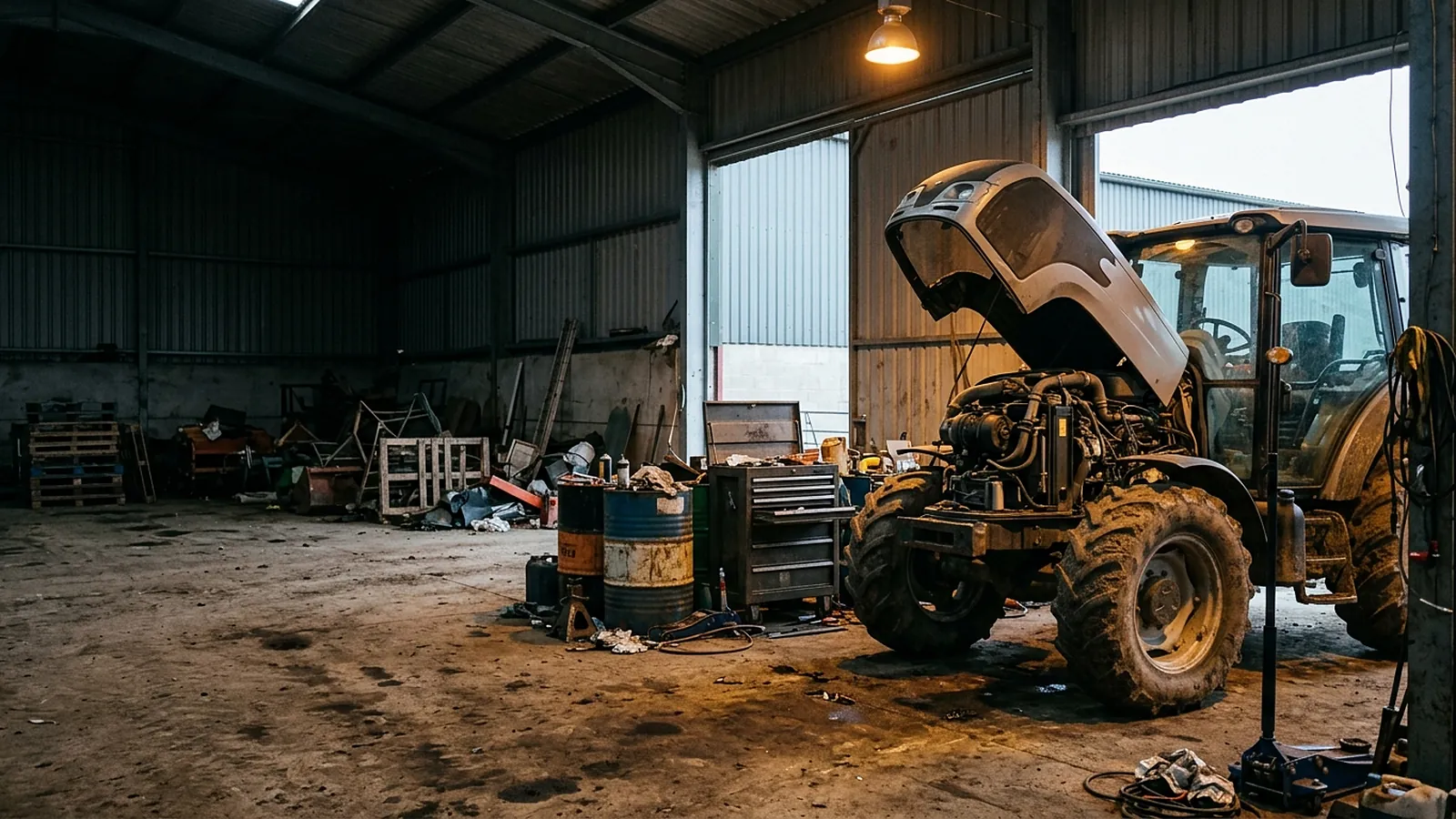
If your diesel engine is hard to start when cold but runs fine by ten o'clock, the engine itself is usually the last thing to blame. Most cold-start faults come down to five things: a tired battery or starter, a failed glow plug or intake heater, waxed or aerated fuel, oil that's too thick for the weather, or lost compression. Only the last one usually means a rebuild or a replacement engine.
This guide is for anyone who has to get a lorry, tractor, telehandler, excavator or generator going on a frosty morning. The checks are in the order a good mechanic would do them, cheapest first. It matters more in a working machine than a car. A loader that won't start when there are cattle to feed, or an excavator holding up a groundworks gang, costs real money by lunchtime.
Why a diesel engine is hard to start when cold
A diesel has no spark. It lights its fuel with the heat made by squeezing air in the cylinder. On a cold morning the block, head and pistons soak that heat away, and the oil is thicker, so the engine turns over more slowly and makes less heat with each stroke. Anything that was marginal in September shows up in November. A weak battery, one dead glow plug or slightly worn rings all get away with it on a mild day and don't on a cold one.
1. Battery, earths and starter motor
Start with cranking speed. If the engine turns over slowly, nothing else on this list will start it. Cold cuts the power a battery can deliver at the same time as thick oil makes the engine harder to turn.
- Get the battery load tested, not just read with a meter. On 24V lorries and plant, test both batteries: one weak battery drags the pair down.
- Clean and tighten the terminals and check the engine earth strap. A corroded earth is a common reason a diesel tractor is hard to start when cold, and it costs pennies to fix.
- If the batteries test good and it still cranks slowly, the starter motor itself may be worn. Brushes, bushes and solenoid contacts all wear, and many starters can be reconditioned rather than replaced.
2. Glow plugs on a diesel engine, intake heaters and thermostarts
Most diesels have a cold-start aid that puts extra heat into the inlet air or combustion chamber. Which one you have depends on the engine. Some large truck engines have none at all.
- Glow plugs. A heated element in each cylinder or pre-chamber. Used on most van diesels and on many compact tractor, mini digger and generator engines.
- Intake air heater. Many larger truck and plant engines heat the incoming air with a grid heater in the inlet manifold instead.
- Thermostart. Older tractors and plant often have a small flame heater in the manifold, fed with fuel from its own reservoir.
One failed glow plug on a four-cylinder engine usually shows up as a rough, misfiring start with white smoke until that cylinder warms up. Two or more failed and it may not start at all.
A multimeter will find a plug that has gone open circuit, but a weak plug can still pass. A glow plug tester that shows each plug heating, or a current-draw check, catches those too. If one plug has failed with age, test the rest. Check the relay or controller as well: if the pre-glow light goes out much sooner than usual, or the plugs aren't getting current, new plugs won't fix it.
Wait for the pre-glow light to go out before you crank. It sounds obvious, but on a cold morning with the engine not catching, people skip it.
Don't use easy-start spray on an engine with glow plugs, an intake grid heater or a thermostart. Ether ignites far too early on a hot plug, heater or flame. The damage can run from a cracked manifold to bent rods or a broken piston.
3. Fuel: waxing, water and air
Diesel forms wax crystals as it gets colder, and the wax collects in the fuel filter. UK forecourts sell a winter-grade diesel through the colder months, but fuel bought in early autumn, or red diesel sitting in a farm tank or bowser since summer, may not be. A machine that starts, runs for a minute and dies, or won't start after a hard frost but is fine by midday, points to waxing.
Once it has waxed, change the filter and warm the filter housing gently. Never use a naked flame. Anti-wax additive helps if it goes in before the cold, but it won't clear wax that has already formed.
Water in the fuel freezes in filters and sedimenter bowls. Drain the water trap before the cold sets in, and keep tanks full overnight to cut condensation.
Then there's air. If the engine needs a long crank before it fires, then runs perfectly, fuel may be draining back to the tank overnight through a perished seal, a loose filter housing or a failing lift pump. Bleed the system and find the leak. Cranking it out every morning flattens batteries and wears starters.
4. Engine oil that's too thick for the weather
The first number in a grade such as 10W-40 or 15W-40 is its cold rating. The lower it is, the easier the oil flows when cold. Check the engine handbook for the right grade for your temperature range. Oil that is overdue a change, or topped up with whatever was on the shelf, can make cranking noticeably slower.
5. Low compression: when the engine itself is the problem
If the battery, starter, heaters, fuel and oil are all good and it's still a struggle, the engine may have lost compression. Worn rings and bores, burnt or sticking valves and a leaking head gasket all let heat escape. The clues are heavy blow-by from the breather, rising oil use, blue smoke, and hard starting that gets worse every winter.
A compression test settles it. It needs a diesel gauge fitted through the injector or glow plug bore, a fully charged battery, and the maker's figures to compare against. Low readings across all cylinders mean general wear. One cylinder well down points to a valve, ring or gasket problem in that cylinder. Two neighbouring cylinders both low suggests the head gasket between them.
At that point there are three sensible options:
- Rebuild your existing engine in our workshop, when the block and crank are sound and the machine is worth keeping.
- Fit a reconditioned exchange engine. You're not waiting for your own engine to be stripped and rebuilt, and the old one goes back as a core.
- On a tighter budget, a tested used engine with a 3-month warranty.
Which is right comes down to cost, how long you can do without the machine, and the condition of your old engine. For farm and site machines, see our tractor and farm machinery engines and plant and excavator engines.
White smoke from a diesel on a cold start
Some white smoke for the first minute on a frosty morning is normal and clears as the engine warms. It's unburnt fuel, it stings your eyes, and it gets worse with a failed glow plug or a dribbling injector.
White smoke that carries on once the engine is warm, smells sweet and comes with the coolant level dropping is different. Coolant is probably getting into a cylinder through a head gasket or a crack. Stop using the machine and get it checked.
Blue smoke is oil. On a cold start that often means worn valve stem seals, rings or bores.
Block heaters for machines kept outside
Block heaters for diesel engines fit into the coolant jacket, usually through a core plug, and keep the block warm overnight from a mains supply. Standby generators often have one fitted as standard so they can take load the moment the mains fails. A sump heater does the same job for the oil. For a machine that lives outdoors and has to start first time, a diesel engine preheater on a timer costs little next to lost hours. Get one made for your engine: the wrong wattage or position can boil coolant locally.
What to send us if you need a price
If the checks point to the engine rather than the starting system, call us on 01525 716422 or send a quote request with:
- Machine make and model, and the engine make, model and serial number from the engine plate
- Hours or mileage
- What you've already checked, and any compression readings
- When you need the machine working again
We'll tell you whether a rebuild or a reconditioned exchange makes more sense, with a fixed price before any work starts. Rebuilds and reconditioned engines carry a 12-month parts and labour warranty in writing. If the fix turns out to be smaller, we also supply diesel engine parts.